German training for companies – tailored to your workflows and specialist areas
Language training for specialists and managers in industry, technical fields, automotive, services and administration – clearly aligned with your day-to-day business operations. For companies in Germany, Austria and Hungary that want to provide targeted support to non-native German-speaking employees in professional communication in German.
What can improve in your company
When employees are technically competent but linguistically unsure, friction arises: instructions are not understood precisely, feedback is missing, technical questions are asked too late, and customer conversations become slow and difficult. With carefully structured German training, these issues can be improved systematically – both within teams and for individual key employees.

Fewer misunderstandings, more stable workflows
Information is understood, clarified, and implemented. This reduces errors and avoids unnecessary back-and-forth.

Language training with a technical and practical background
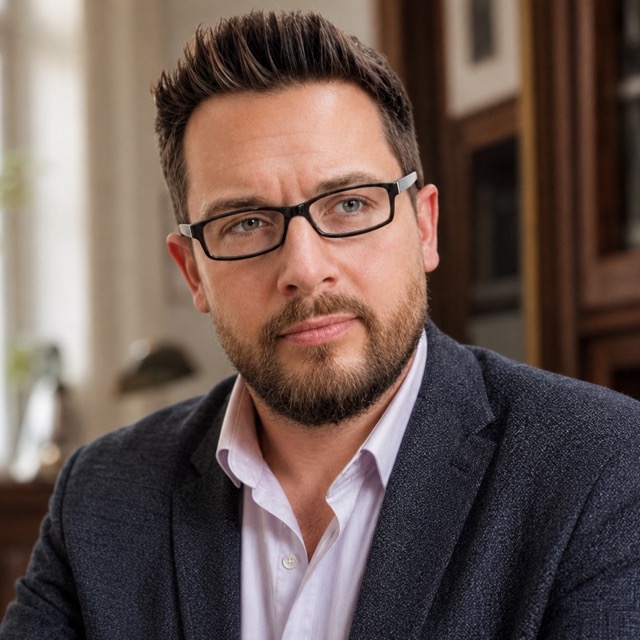
The training is led by Ing. Ferenc Andrási. He is a native speaker of German with training in electrical engineering and several years of work as a German trainer abroad. For many years, he has worked with international professionals from a wide range of industries. The focus is not on artificial dialogues about boat trips on Lake Constance, waste sorting or holiday situations, but on the language your employees actually need in the company. Typical communication situations are practised, such as asking follow-up questions, handovers, meetings, technical explanations, emails, short reports, complaints, project coordination and customer contact.
Industry-relevant content
The training draws on real workflows, plans, and documents from industry, engineering, services, and administration. Technical contexts are prepared in a way that is linguistically precise and at the same time manageable for non-native speakers.
Working with international professionals
The course concepts were developed through collaboration with employees who work in German-speaking countries and use German as a second language in their everyday professional life. Typical stumbling blocks in meetings, handovers, and customer situations are therefore built in from the outset.
Language training with a clear structure
Language resources are not taught in isolation, but systematically tied to recurring situations in day-to-day work. Clear structures, reusable sentence patterns, and factual feedback lead step by step to greater confidence in communication.

Two offers, one goal
Company courses or individual training – depending on need
Not every team and not every role needs the same format. That is why there are two clearly separate offers that can be combined if required.
Company courses for teams
For groups of 3–8 people with similar tasks: e.g. production, logistics, customer service, engineering, administration. Focus areas are tailored to your field – for example handovers, short updates, meetings, simple reports, emails, etc.
One-to-one training for employees
For specialists and managers whose language skills directly affect professional impact, outcomes and reliable collaboration: project managers, key account roles, engineers, specialists, team leaders and people in central interface positions. The training also works with concrete cases: emails, conversations, presentations, sensitive situations, complaints, feedback, small talk in a professional context and coordination with customers or colleagues.

Typical areas of application
✓ Industry and engineering (production, maintenance, engineering, quality)
✓ Customer service, sales, complaints handling
✓ Administration, HR, organization, dispatching
✓ IT, project work, internal consulting and coordination
The common denominator: employees who are technically competent and need to communicate reliably in German in their everyday professional work.

In three steps to the right solution
Non-binding consultation
You briefly describe your situation: areas, roles, typical communication issues, time constraints. We clarify whether company courses, individual training, or a combination makes sense.
From current state to target state
Assessment of the intended participants, selection of formats, definition of goals and scope. You receive a clear proposal of how the training is structured.
The training can begin
Regular live online sessions, prepared with short tasks. Content is adjusted as needed if it becomes clear over time which situations are particularly relevant for your employees.
FAQ
Here you will find answers to frequently asked questions about German language training.
The training is aimed at companies whose employees need to use German reliably in their daily work: in meetings, emails, handovers, follow-up questions, complaints, documentation, customer contact, or communication with German-speaking locations.
It is particularly suitable for specialists, teams and interface roles in industry, technology, automotive, services, administration, IT, logistics, quality assurance, engineering and project work.
The lessons are not designed as a standard textbook-based course, but are aligned with the participants’ actual tasks. The training focuses on concrete communication situations from the company: asking follow-up questions, giving status updates, explaining technical matters, writing emails, preparing short reports, participating in meetings, handling handovers, giving presentations, responding to complaints, and coordinating with internal or external partners.
Grammar is not treated in isolation. It is reinforced where it is needed for clear, reliable and professional communication.
For companies, there are mainly two suitable formats: group courses for employees with similar tasks, and individual training for specialists, managers or key personnel.
Group courses are suitable when several participants deal with comparable communication situations. Individual training is appropriate when German has a direct impact on a particular person’s quality of work, speed, external perception or collaboration.
Further information is available on the pages Group Courses for Companies and Individual Training for Employees.
Individual training is particularly suitable for specialists and managers, project leads, engineers, quality staff, team leaders, key account employees, technical customer support staff, administration, IT, HR, logistics, or other roles involving direct contact with German-speaking colleagues, customers, suppliers or parent companies.
The advantage is that the training focuses precisely on the situations that are relevant for this person within the company.
A solid A2 level can already be developed further. In this case, the initial focus is on building stable linguistic foundations: sentence structure, frequently used phrases, simple follow-up questions, descriptions, explanations and short professional messages. Technical language is then added step by step once the foundation is sufficiently stable.
For more complex professional communication, such as meetings, complaints, presentations or technical coordination, a level of at least B1 is usually particularly useful.
The offer is not designed as a classic beginner course. If employees already have a reliable A2 level, the training can build on that. If their German skills are still very limited, it should first be assessed whether a basic course outside this specialised format would be more appropriate.
The process begins with an orientation meeting. In this meeting, the target group, areas of responsibility, typical language-related problems, existing German skills, available time slots and the appropriate format are clarified. A proposal is then developed for the scope, content and implementation of the training.
Lessons are booked in packages. The number of lessons, format and validity period of each package are clearly stated on the relevant offer page.
The content is individually tailored to the participants, the company and the relevant communication situations. The training works with recurring language patterns, typical formulations, professional dialogues, emails, meeting situations and tasks from everyday working life.
Professional small talk can also be part of the training. This is not a secondary topic: informal conversations help employees establish contact more easily, feel more confident in conversations and communicate more naturally within teams.
Yes, provided they are suitably prepared in advance. Documents should be anonymised, redacted and modified in such a way that they no longer contain internal information, confidential customer data, technical details or trade secrets.
The aim of the lessons is not to process confidential company information, but to work linguistically on typical structures: formulations, follow-up questions, descriptions, email structure, tone and clarity.
A shared document is used during the lessons. Important formulations, notes, corrections, examples, vocabulary lists and, where necessary, follow-up exercises are recorded there. This makes it possible to track which topics have been covered and what should be worked on further.
Upon request, the company can also receive additional feedback on progress. This describes which content has been covered, which linguistic improvements are visible and which next steps appear useful.
The lessons take place exclusively online. This offers several practical advantages for companies: no travel time, lower organisational effort, better planning when several locations are involved, easier integration into working-time models and flexible participation even for employees working from home or in decentralised teams.
No special technical equipment is required. Participants only need a stable internet connection, a webcam and a functioning microphone. The lessons take place via Google Meet.
The lessons take place via Google Meet. The meeting link is sent by email exactly at the start of the lesson.
Appointments can be cancelled or rescheduled no later than 36 hours before they begin. If they are cancelled at shorter notice, the appointment is considered to have taken place.
Course times are arranged by agreement. Whether specific time slots, such as evening appointments or sessions adapted to shift schedules, are possible is clarified during the orientation meeting.
Information on the scope, format, number of lessons and validity of the packages can be found directly on the relevant offer pages: Group Courses for Companies and Individual Training for Employees.
The training is not structured as a one-off sequence of isolated lessons. Content from previous sessions is deliberately repeated, expanded and applied again in new situations. This makes it clear which formulations are already used confidently and which structures still need further practice.
The trainer observes closely where uncertainties arise: in sentence structure, follow-up questions, technical terms, pronunciation, reactions in conversations or written expression. This results in highly targeted training. The focus is not on working through a textbook chapter in a generic way, but on the points that are genuinely relevant for the individual learner or group.
This makes the training many times more efficient than standardised mass courses: time is not spent on content that participants have already mastered or that rarely occurs in their daily work, but on the language situations in which real confidence needs to be developed.
Linguistic confidence does not arise simply because a topic has been explained once. What matters is whether a formulation, sentence pattern or conversational strategy can also be used spontaneously later on.
That is why key content from previous lessons is deliberately revisited: typical follow-up questions, important sentence openings, technical terms, polite corrections, brief explanations, reasons or conversational responses. Repetition here does not mean mechanical memorisation, but application in new, realistic situations.
In this way, understood knowledge gradually becomes language that can be actively retrieved and used.
A shared document is used for the training. During the lesson, important formulations, corrections, new words, sentence structures, examples and, where appropriate, exercises are recorded in it.
The document serves several purposes.
After the lesson, the learner can look things up, revise, review vocabulary lists and work on exercises. At the same time, it creates ongoing documentation of the training process. This means it is possible to see not only what was covered in a single lesson, but also which topics recur, what progress has been made and which points should continue to be practised.
Especially in individual training and small groups, this document is an important working tool. It does not replace active participation; it supports it. The learner can focus more strongly on speaking, understanding and responding, while the trainer records relevant notes, corrections and formulations.
No. The lesson is not a 50-minute monologue, nor is it a situation in which the learner mainly takes notes. The focus is on active communication: speaking, responding, explaining, asking follow-up questions, formulating and improving.
The trainer supports this process by recording important points in the shared document. This allows the learner to concentrate on the conversation. After the lesson, the central content is still available in a structured form.
This is particularly helpful because many learners are already strongly focused on finding the right formulation during a conversation. If they also had to write everything down themselves at the same time, it would tend to slow down their spoken performance.
Yes, to an appropriate extent. Small talk is not incidental chatter, but an important part of professional and private communication. In many situations, it is not only the technical or professional content that determines how confident, likeable and professional someone appears.
Short conversations before a meeting, when getting to know new colleagues, with customers, at appointments, during breaks or before a job interview create connection and orientation. Those who can handle such situations linguistically feel more confident and are also perceived more naturally by the other person.
This is not about artificial phrases, but about suitable expressions, correct intonation, polite responses, short follow-up questions and a sense of which formulation is appropriate in which situation. These nuances in particular help communication avoid sounding stiff or uncertain.
For this reason, alongside job-related or technical language, an appropriate proportion of everyday conversational language is also practised.
Yes, but not as an end in itself. Grammar is addressed where it is necessary for clarity, precision or professional impact.
The trainer listens closely to where mistakes occur and where they may lead to misunderstandings. These points are then addressed and practised in a targeted way. If, for example, tenses, word order, articles, prepositions or subordinate clauses make the message unclear, precisely these structures are worked on.
The focus is not on abstract rules, but on frequent and useful sentence patterns. Learners should build formulations that they can actually use in everyday life, at work or in specific conversational situations.
The exercises are always adapted to the specific situation. The aim is not to produce arbitrary example sentences, but to practise typical communication tasks realistically.
In a corporate context, this may include, for example:
✔️ formulating a technical follow-up question
✔️ describing a deviation
✔️ explaining a cause
✔️ presenting measures from an 8D report in precise language
✔️ informing a customer about the current status
✔️ responding to a complaint in a factual manner
✔️ structuring a handover
✔️ asking a question or raising an objection in a meeting
✔️ formulating an email politely, clearly and precisely
In individual training for private clients, the exercises may focus, for example, on job interviews, doctor’s appointments, dealings with public authorities, looking for accommodation, workplace conversations, phone calls, presentations or everyday situations.
The decisive point is that the exercise should not only be linguistically correct, but should also fit the real situation.
Yes, provided the focus is on how the specialist content is expressed linguistically. The lessons do not replace technical, legal, medical or internal company-specific professional advice. They do, however, help learners express existing specialist knowledge in German in a way that is clear, correct and appropriate for the recipient.
Especially with specialists, the problem is often not that they do not know the content. The problem is that they cannot formulate their knowledge in German quickly, clearly or confidently enough. This is exactly where the training comes in.
No. Specialist language is important, but on its own it is often not enough. Someone who only knows technical terms may be able to name a problem, but may still appear uncertain, abrupt or difficult to understand in conversation.
That is why the training works on two levels:
The professional level: How do I describe a problem, a process, a cause, a measure, a decision or a result precisely?
The interpersonal level: How do I ask follow-up questions politely? How do I signal understanding? How do I express criticism factually? How do I respond to uncertainty? How do I establish contact? How do I come across as clear, respectful and professional?
Both belong together. Good communication does not only mean being right on a technical or professional level. It also means that the message actually reaches the other person.
Professional means that the learner can express content factually and correctly. They can explain what happened, what is needed, which decision was made or what the next steps are.
Interpersonal means that the message is formulated in a way that is appropriate in conversation. This includes tone, politeness, clarity, responsiveness, intonation and the ability to remain natural even in small conversational situations.
Yes, within the booked format. The content is based on the learners’ goals, language level, typical situations and recurring mistakes. In individual training, personal requirements can be addressed particularly closely. In group courses, the content is aligned with shared professional situations and the needs of the group.
The training is therefore not a mass product. It does not follow a rigid teaching template, but develops from what the learners actually need and from what becomes visible during the process.
Many learners understand significantly more than they can spontaneously say themselves. This gap between passive understanding and active speaking is often decisive at work and in everyday life.
That is why the training involves a great deal of speaking: explaining, asking follow-up questions, summarising, responding, correcting and reformulating. The trainer intervenes when a formulation is unclear, inappropriate or incorrect, and offers better alternatives.
Contact me for a non-binding consultation
A short orientation call will show which form of cooperation suits your company. You briefly describe your situation and goals; I outline suitable course options and framework conditions. Afterwards you can decide in peace whether and how you would like to start.

Send me a message
I will reply as soon as possible.
