 Skip to content

When good professionals cannot fully show in German what they are capable of
International employees bring expertise, experience and responsibility to their roles. But in day-to-day work, language often determines how effectively that expertise can be communicated within the company.
Questions in meetings are asked too late. Technical matters remain unclear. Emails require additional editing. Communication with customers, suppliers or German-speaking locations takes more coordination than necessary.
With job-specific German training, you support your employees exactly where language becomes critical for collaboration, processes and professional communication.
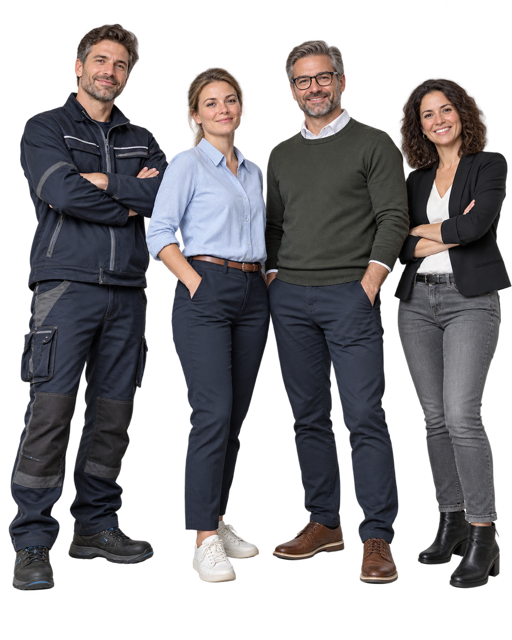

You may recognise situations like these in your company…
- A highly capable employee contributes far less in German-language meetings than they could.
- Questions about requirements or changes are not raised early enough because finding the right wording is difficult.
- Technical emails or reports need to be revised for language and clarity.
- An employee is technically confident with customers but comes across as more hesitant or less precise in German.
- Individual bilingual colleagues repeatedly take over communication for others and gradually become a bottleneck themselves.
- An employee is ready to take on more responsibility but needs greater confidence when communicating in German.
The real issue is rarely a lack of professional expertise. The gap arises between what an employee is capable of professionally and what they can communicate clearly and professionally in German at the right moment.
What targeted language training can improve
Not German for its own sake. German that works in everyday business situations.
Clearer coordination
Requirements, changes and open issues can be understood and communicated more precisely.
More confident communication
Employees can participate more actively in meetings, discussions and follow-up questions.
More precise technical language
Technical relationships, problems and solutions can be explained more clearly.
A more professional external presence
Customers, partners and German-speaking stakeholders experience greater clarity and linguistic confidence.
What we can work on specifically
A general language course has to work for a broad range of participants and situations.
In job-specific training, we start with your employees’ actual responsibilities and build the language focus around them.
- If a quality specialist needs to explain complaints, we train exactly that type of communication.
- If a project manager regularly coordinates with German colleagues, we work on meetings, questions, decisions and status updates.
- If an employee takes on customer communication, the focus can be on conversation management, professional tone and spontaneous responses.
- If technical information needs to be communicated in writing, we work on clear and comprehensible emails, reports and documentation.
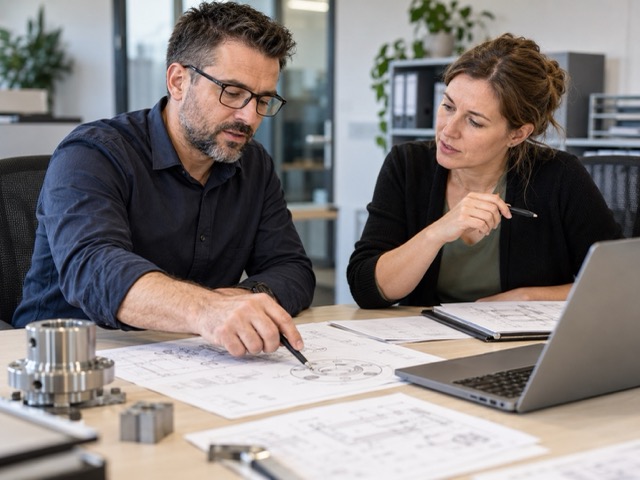
Meetings and coordination
Ask questions, represent positions, justify decisions and summarise results.
Technical communication
Explain faults, causes, changes, processes and possible solutions precisely.
Customers and business partners
Clarify expectations, respond professionally and address difficult issues in a constructive way.
Written communication
Write emails, reports, documentation and short statements clearly and professionally.
Leadership and responsibility
Explain tasks, give feedback, communicate decisions and conduct professional conversations.
Collaboration with German-speaking markets
Coordinate more clearly with locations, customers and partners in Germany, Austria and Switzerland.

Language training with a clear practical focus
Grammar, vocabulary, pronunciation and sentence structure are, of course, part of the training. But they are not taught in isolation. We work on them where they are relevant to the employee’s actual professional tasks.
- If an employee regularly needs to explain technical causes, we practise the structures required for exactly that.
- If written communication leads to misunderstandings, we work on precision, structure and word choice.
- If spontaneous responses in meetings are difficult, we practise the phrases and communication patterns needed in those situations.
What matters is not how many language topics have been covered, but whether the employee can communicate more clearly and confidently in everyday work.
Professional communication requires more than general language lessons
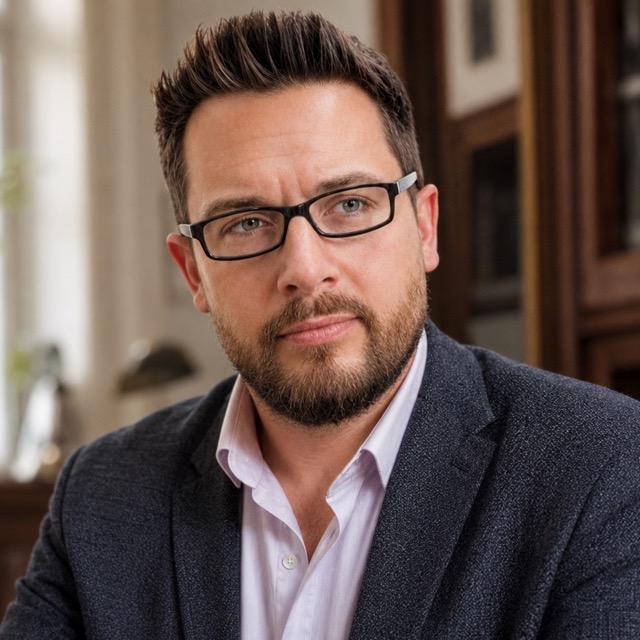
I am Ing. Ferenc Andrási, a native German speaker, engineer and German-language trainer with many years of experience in adult education.
My technical background helps me quickly understand operational situations, technical contexts and the demands of professional communication.
One principle is particularly important:
Your employees are the experts in their own work. My role is to give them the language tools they need to use and communicate that expertise more effectively in German.
I work with professionals from technical fields, industry, administration, IT and services and understand both the linguistic side and the specific requirements of working adults in training.
Native German speaker
Engineer with linguistic expertise
Job- and role-specific training
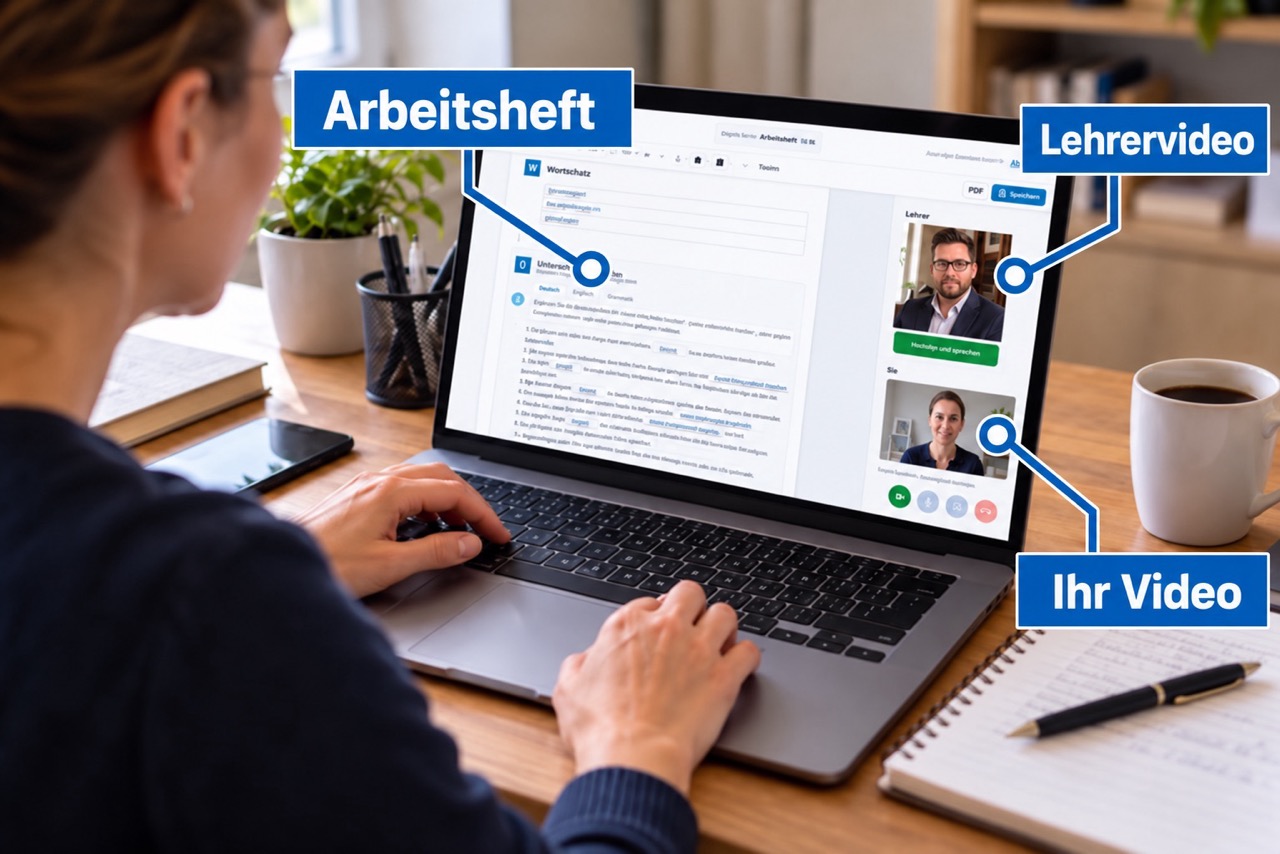
A digital workbook for structured learning
- Important phrases, corrections, exercises and training content are documented in a shared digital workspace.
- This gives each employee a structured collection they can also use between training sessions.
- At the same time, it remains transparent which topics have already been covered and what will be worked on next.
- The training does not end after 50 minutes – the material developed during the sessions remains available and can continue to be used.
Who the training is suitable for
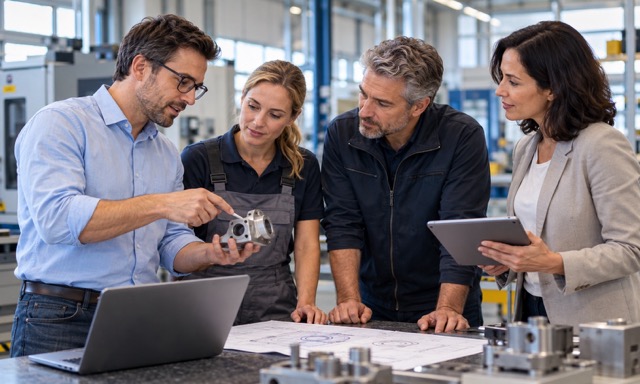
Job-specific German training is particularly suitable for employees who already have some German and need to use the language more confidently in their role.
For example:
- professionals in engineering, quality, production and service,
- project managers and employees working with German-speaking stakeholders,
- employees in sales, customer service and support,
- professionals in administration, HR and internal services,
- managers and employees taking on increasing responsibility.
The training is particularly useful wherever German is directly needed for coordination, documentation, customer communication or collaboration with German-speaking locations. For complete beginners, a general foundation course is usually the more appropriate first step.
Online training that fits into company workflows
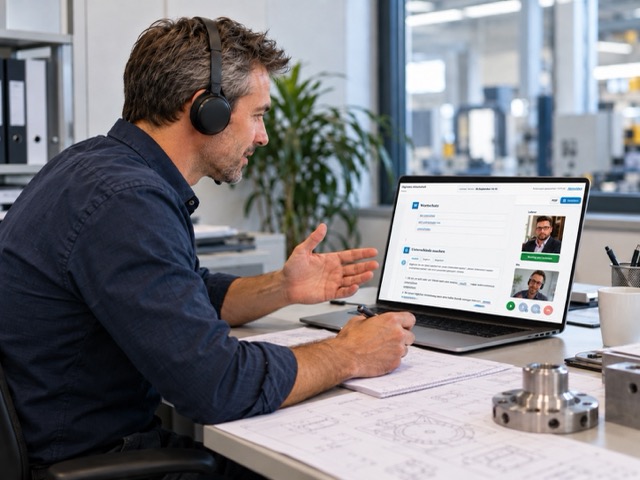
Training takes place live online and can be organised as one-to-one training or, depending on the objective, as group training.
- Sessions can be coordinated with projects, meetings and operational schedules.
- At the beginning, we define the objectives and relevant communication situations. During the programme, the content can be adjusted if responsibilities or requirements change.
- Where appropriate, materials from the employee’s actual working environment can also be incorporated – for example emails, presentations, reports or typical communication scenarios.
Structured in organisation. Flexible in content. Consistently focused on real professional communication.

Would you first like to see which training format fits your company?
You do not need to decide on a specific training programme yet.
Start by requesting the free company information pack.
It contains concise information on:
- training formats,
- organisation and process,
- possible areas of focus,
- applications for specialists and managers,
- costs and general conditions.
This allows you to assess whether the concept fits your company and the needs of your employees.
Request information about German training for companies

GERMAN LANGUAGE TRAINING FOR COMPANIES
Would you like to arrange German language training for your employees?
You can take your time to explore the training options and prices first, or discuss your specific requirements with me directly.
During a free initial consultation, we will determine which type of training would suit your employees and how the lessons could be organised. If you only have a few questions, you can simply send me a message.
Find the right German training for your employees
The information package explains when one-to-one training for key personnel makes sense, when a small group is the better option, and how real communication tasks from day-to-day work are integrated into the training. It also gives you a clear overview of the process, training options and pricing. This helps you assess which format best fits your company’s needs.
Reserve a free initial consultation
First choose a suitable available time. Then add your contact details and, if you wish, a few brief notes about your learning goals.
1. Choose a time
Click an available time. It will automatically be copied into the “Trial lesson time” field. If none suits you, you can enter your own preferred time window there.